
Why the Words We Use Matter
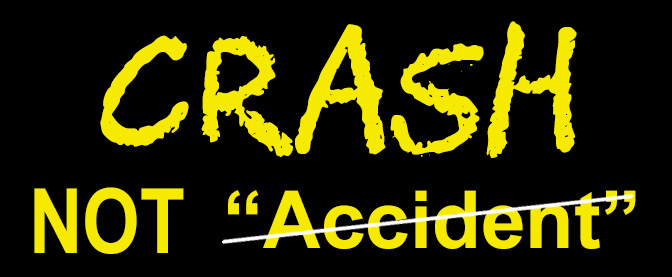
For many years, traffic collisions have been described as “accidents.” But that word sends the wrong message. An accident suggests something unavoidable — a random event that no one could have predicted or prevented. In reality, most roadway crashes happen for specific, identifiable reasons.
Speeding, impairment, distraction, fatigue, and reckless behavior are among the leading causes of serious and fatal crashes. These are not random occurrences — they are preventable events. Using the word “crash” instead of “accident” helps shift our thinking from inevitability to responsibility.
Language shapes how we understand problems and how motivated we are to solve them. When a crash is described as an “accident,” it can unintentionally minimize the role human choices play. Calling it a crash encourages us to ask important questions: What caused it? What could have prevented it? What changes can keep it from happening again?
Research supports this idea. A study conducted by researchers at Rutgers University and Texas A&M University found that the language used in news coverage can influence how people assign responsibility for roadway collisions. When reports use the word “crash” and place incidents within a broader pattern of preventable events, readers are more likely to support policies and actions that improve road safety.
 Behind every crash statistic is a real person — a child walking to school, a parent driving home from work, a neighbor riding a bike, or a friend crossing the street. These lives matter, and their injuries or deaths should never be dismissed as unavoidable.
Creating safer streets begins with recognizing that crashes are preventable. By making safer choices behind the wheel, slowing down, eliminating distractions, and looking out for people walking and biking, we can all help reduce crashes and protect one another.
Changing a single word may seem small, but it changes how we think about responsibility and prevention.
Crashes are preventable. And preventing them starts with all of us.